
Maximum-Likelihood (ML) Phylogenetics in High Performance Computing
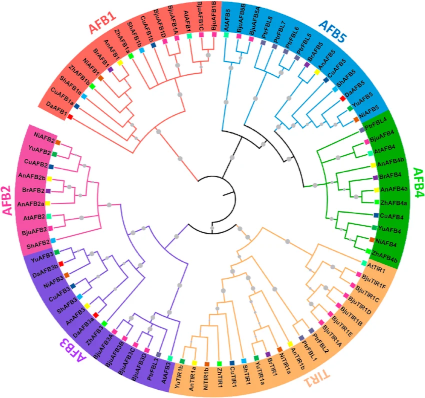 Given a DNA or protein sequence, Maximum-Likelihood (ML) Phylogenetics searches for an evolutionary tree that would most probably have produced the observed sequences. This probability is based on a statistical model of how sequences evolve.
For example, consider the DNA sequences for the following primates with standard DNA nucleotide abbreviations: adenine (A), cytosine (C), guanine (G), and thymine (T). For what it's worth, a single 7-letter sequence like "ACGTTAGC" is normally too short to build a meaningful tree.
Species Sequence Difference
Human ACGTTAGC
Chimp ACGTTAGT Differs from Human at position 7
Gorilla ACGCTAGT Differs from Human at position 4, 7
Orangutan ATGCTAGT Differs from Human at positions 2, 4, 7
Apart from the quantity of differences, there are qualitative changes as well, with the probability correlated to the actual physical alteration required. Changes between adenine and guanine (A to G), for example, are more common than adenine and thymine; the former is a transition mutation, swapping one purine base for the other purine, while the latter is a transversion mutation, swapping a purine for a pyrimidine base.
With our toy example, there are a number of possible evolutionary trees. It is possible, for example, that the four species are entirely separate and have different common ancestors. Or you might notice that the difference between Gorilla and Orangutan is a slight mutation, between cytosine and thymine, which is relatively common. With the four species, there are only three possible unrooted trees. But once the number increases, the potential variation increases; with ten species, there are 2 million potential evolutionary trees, and with a hundred species, the number is 2*10^182.
There is currently more than 6,500 living mammal species. When one starts looking at other taxonomic levels (phylum, kingdoms, domains) one quickly ends up with far more potential genonic trees than atoms in the known universe. As a result, phylogenetic programs such as RAxML, IQ-TREE, PhyML, and FastTree-2 do not examine every possible tree. Rather, they search the tree space, repeatedly making small rearrangements based on whether the observed DNA alignment is more likely than in previous iterations. Eventually, this results in a tree with a very high likelihood of accuracy. There are many algorithms for calculating likelihood, from the deliberately simplest and most unrealistic (Jukes-Cantor model from 1969) to contemporary and complex models, such as the Newton-Raphson method.
As can be imagined, accurate and fast computation of these complex phylogenetic searches is almost implausible even on powerful desktop computing systems; one will invariably look to a high-performance computing cluster with GPU acceleration. So, in addition to variation in the algorithms that are used, Maximum-Likelihood (ML) Phylogenetics searches use a different architecture. IQ-TREE 2 is designed to use GPU accelerators to accelerate maximum-likelihood scoring functions and tree evaluations for genomic datasets, whereas RAxML/RAxML-NG uses fine-grained shared-memory parallelisation and coarse-grained MPI for scalability.
Further, just to make matters even more complex, maximum likelihood is not the only approach for phylogenetics. Whereas maximum likelihood, which finds the most probable tree from the observed data, calculates a single tree, Bayesian inference yields a range of probable trees and their relative probabilities, incorporating prior knowledge (e.g., the fossil record). Bayesian inference is computationally more intensive and therefore typically slower, and ML and Bayesian approaches are often implemented in the same application. Applications such as BEAGLE perform inference with GPU acceleration for core likelihood and gradient calculations, whereas MrBayes uses GPU-accelerated likelihood calculations with BEAGLE and also supports MPI and OpenMP for inference.
Ultimately, one has to make choices about speed and accuracy; a valiant example of such an inquiry is an ongoing project by Paul Gardner at the University of Otago, who has differentiated between bioinformatic tools along these dimensions. He has written several papers on RNA sequencing alignment programs and metagenomic analysis tools, noting significant divergence. Notably, he has discovered that it is not the discipline the software comes from, nor the academic "status" of the institution, but rather developer commitment to fixing issues: "active, long-term software maintenance is a key factor for producing accurate tools". This author hypothesises that the same approach can be applied to phylogenetics.
Further Reading
DNA Replication and Causes of Mutation
http://www.nature.com/scitable/topicpage/dna-replication-and-causes-of-m...
List of phylogenetics software
https://en.wikipedia.org/wiki/List_of_phylogenetics_software
Substitution Models
https://en.wikipedia.org/wiki/Substitution_model
https://evomics.org/resources/substitution-models/nucleotide-substitutio...
Hybrid Parallelization of the MrBayes & RAxML Phylogenetics Codes
https://cme.h-its.org/exelixis/resource/doc/Phylo100225.pdf
Image from:
Comparative genomic profiling of transport inhibitor Response1/Auxin signaling F-box (TIR1/AFB) genes in eight Pyrus genomes revealed the intraspecies diversity and stress responsiveness patterns
https://www.researchgate.net/publication/380360506_Comparative_genomic_p...